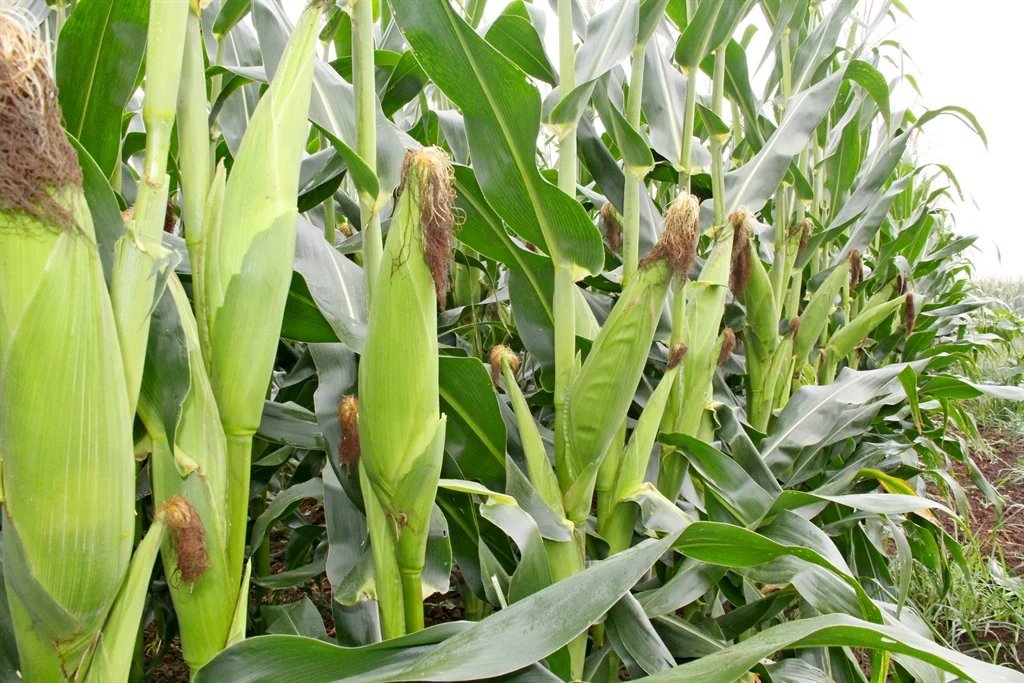
Maize remains one of the most consumed grains in Africa, feeding over 300 million people and covering 24% of the continent’s farmland. However, maize production is heavily dependent on rain-fed agriculture, making it extremely vulnerable to climate change, a vulnerability that threatens food security across the region.
Today I had the opportunity to sit down with Pacifique Nshimiyimana, a Global Farmer Network farmer from Rwanda, to discuss the current state of maize production in his country and the innovative approaches being taken to secure its future.
Rwanda’s Maize Sector: Progress and Potential
Maize remains a strategic staple crop in Rwanda, with production showing strong growth in recent years driven largely by smallholder farmers and sustained government support. In 2024 Season A, national maize output reached approximately 507,985 metric tons harvested from over 249,000 hectares, a remarkable 30% increase compared to 2023. Production is concentrated mainly in the Eastern Province, particularly in Nyagatare, Gatsibo, Kayonza, Ngoma, and Kirehe districts.
Despite this impressive growth, significant challenges remain. Average yields stand at around 2 t/ha, while better resourced large-scale farmers achieve up to 4.6 t/ha, still well below the crop’s full genetic potential of 8-10 t/ha under optimal conditions. This yield gap represents both a challenge and an opportunity: if smallholder farmers could access the inputs, knowledge, and support needed to close even half of this gap, Rwanda’s maize production could potentially double without expanding farmland.
Post-harvest losses, estimated at around 15%, further reduce effective supply meaning that roughly 76,000 metric tons of the 2024 harvest never reached consumers. Early assessments for Season A 2025 indicate a slight 5% decline compared to 2024, largely due to climatic stress, though overall production for 2025 is still projected to recover and grow modestly.
The Fall Armyworm Crisis
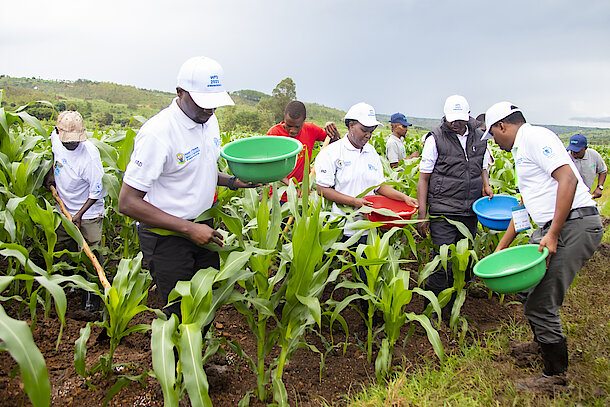
The fall armyworm (Spodoptera frugiperda) is currently the most significant constraint to maize productivity in Rwanda, causing substantial yield losses across major producing zones. This invasive pest, which arrived in Africa in 2016, has devastated maize crops across the continent, with losses ranging from 20-50% in heavily affected fields. For smallholder farmers operating on thin margins, such losses can mean the difference between food security and hunger.
This challenge is compounded by unpredictable rainfall patterns linked to climate change, particularly affecting non-irrigated maize systems. Extended dry spells during critical growth stages can reduce yields by 30-40%, while excessive rainfall promotes fungal diseases and complicates pest management. Together, pest pressure, climate variability, and post-harvest losses continue to suppress yields well below attainable levels.
A Deliberate Shift Toward Innovation
The Government of Rwanda, through the Crop Intensification Program (CIP) led by the Ministry of Agriculture and Animal Resources, has made a deliberate shift toward hybrid maize seed adoption over the past decade. Locally adapted hybrids such as RHM104 and RHMH1601 have been widely promoted to improve productivity and resilience, representing a move away from traditional open-pollinated varieties that dominated Rwanda’s fields for generations.
More recently, Rwanda has taken a bold, forward-looking policy step by supporting advanced research and regulatory approval of biotechnology-based maize solutions. In 2025, the Rwanda Environment Management Authority granted an environmental release permit for TELA Maize varieties, which are both fall armyworm-resistant and drought-tolerant. These varieties were developed under the leadership of the African Agricultural Technology Foundation (AAFTA) in partnership with Bayer, using advanced breeding techniques including genetic modification.